

Before you book rental equipment for a corporate event, ask your venue what it already provides and what it leaves out. The real work is confirming the gear, who installs it, and how delivery works, not picking between venues. A short checklist covers furniture, power access, staging space and weather protection for an outdoor setup.
A corporate event is a gathering a business or organization hosts for a work purpose, such as a meeting, conference, product launch, or appreciation event.
Skipping the venue walkthrough creates two risks. You could pay to rent chairs or tables the venue already keeps in storage. Or you could miss a real gap, like no power near the stage for your audio-visual equipment, until days before the event.
This applies if you're planning a corporate event in Gainesville, Alachua County, Ocala or Marion County, Florida.
What a Corporate Event's Physical Setup Usually Needs
A corporate event's physical setup can draw on tents, tables and chairs, and table linens. It can also need staging and accessories, audio-visual and lighting, pipe and drape, outdoor cooling and heating, and stanchions for crowd control. Stage, sound and lighting production for corporate events sits in this same equipment range. Each category solves one part of the setup.
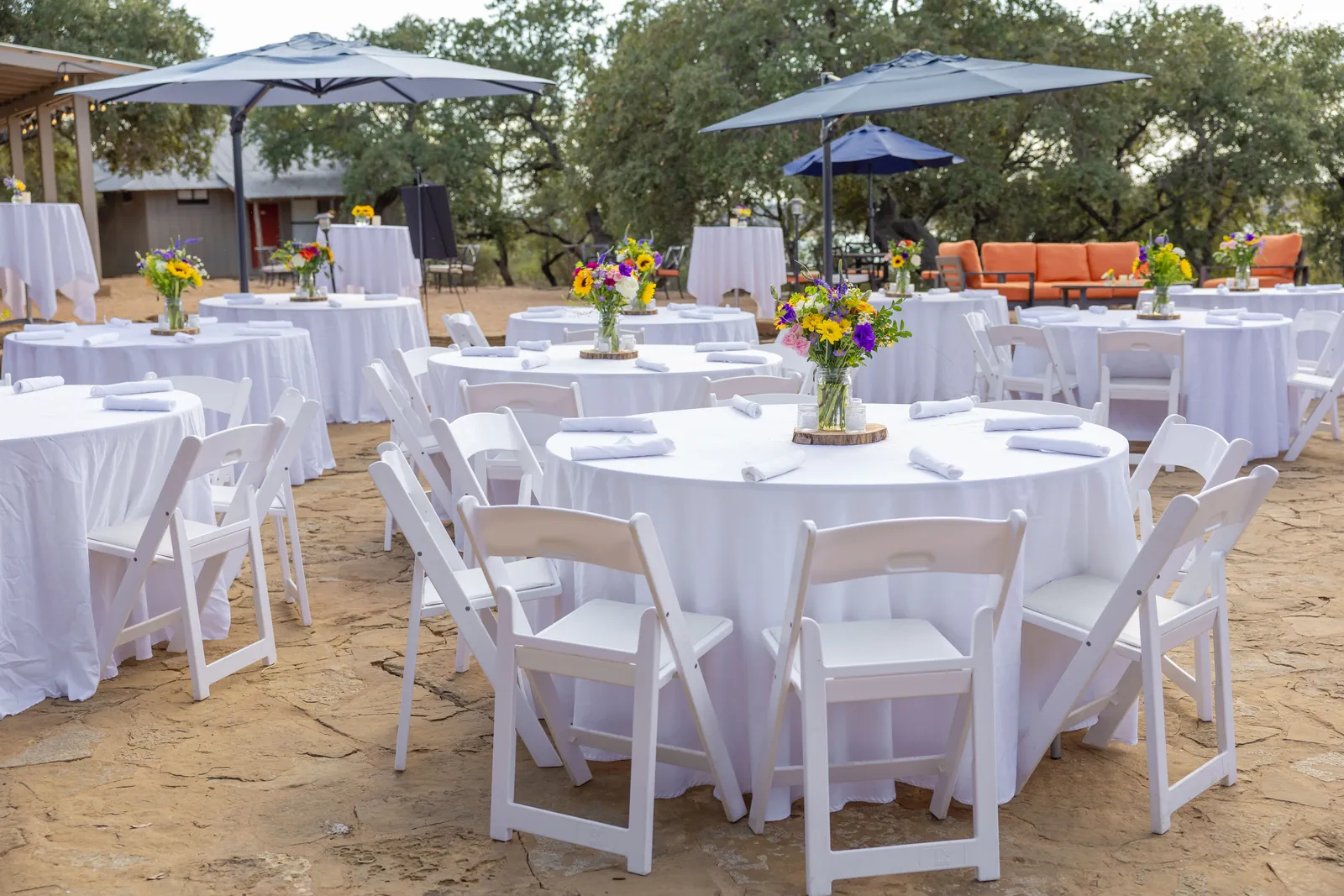
A tent covers guests and equipment when the event sits outdoors or the venue has no indoor space large enough. Tables and chairs give guests a place to sit for meals, registration or group work. Table linens are the cloths that cover those tables for a finished look.
Staging gives speakers, panels or award presentations a raised, visible spot to stand. Audio-visual and lighting equipment covers the microphones, screens, sound systems and light fixtures that make a presentation easy to hear and see.
Pipe and drape is a frame hung with fabric panels. Organizers use it as a backdrop behind a stage or to split one room into separate sections.
Outdoor cooling and heating equipment, such as fans or heaters, can help guests stay comfortable at an outdoor event, though no equipment can promise comfort in every weather condition. Stanchions are posts linked by rope or belt. They direct where guests walk or stand, useful for lines, registration or marking off a restricted area.
Your Venue-to-Rental Worksheet: Equipment Gaps and Who Confirms Them
A simple worksheet turns a vague venue visit into a clear record of what is settled and what is still open. List the event element, the equipment you likely need, the question to ask the venue, who confirms the answer, and the current status.
Coverage varies by venue, so ask specific questions instead of assuming the room has what you need:
What furniture is already in the room
Where power outlets sit for sound, display and staging equipment
How a delivery truck or crew reaches the space
What time window you have to set up and clear out
Each row below lists one event element and a question for your venue to answer.
Event element | Question to ask the venue | Who confirms it | Status |
|---|---|---|---|
Seating area | What tables and chairs does the room already have, and in what condition? | Event lead | Open / Confirmed |
Presentation area | Where are the power outlets for sound and display equipment? | AV contact | Open / Confirmed |
Room layout or backdrop | Does the room need a backdrop or divider, or does the venue already provide one? | Event lead | Open / Confirmed |
Outdoor coverage | Is the outdoor space level and clear, and can a delivery truck reach it? | Site contact | Open / Confirmed |
Climate | Does the outdoor area already have shade or heat, or does it need added cooling or heating? | Event lead | Open / Confirmed |
Crowd flow | Does the venue already have a check-in or line setup, or is that missing? | Site contact | Open / Confirmed |
Once you've confirmed the gaps with your venue, the corporate event rentals page is a good next stop for corporate event equipment.
Permits and site rules to confirm with your venue
Ask whether an outdoor tent needs its own permit separate from the venue booking. Alachua County treats special events as a temporary use activity, which may need its own permit.
For special events or temporary sales, the county limits temporary use permits to once every 60 days per property, up to six times a year. Ask early if the venue has hosted other special events recently, since that history can affect your date.
If a tent goes up, ask who will provide the flame-resistance certificate for the permit file. Gainesville's tent permit checklist asks for a copy of the Certificate of Flame Resistance, showing the tent fabric meets flame propagation performance criteria.
Ask the venue what insurance and additional-insured coverage it requires before you commit to rentals. One Gainesville-area venue's policy requires outside groups to carry $1 million in general liability coverage. It also requires naming the university and its board as additional insureds. Requirements like this vary, so get the figure in writing.
Before any rentals go in, ask the venue to check accessible routes around the tables, staging and other equipment. Federal accessibility standards set a minimum clear width of 36 inches for accessible routes, with added rules at turns and narrow sections.
Weather and layout deadlines to confirm
Ask the venue when it locks in furniture layouts and rental quantities. One venue's policy asks for setup-change requests at least two business days before the event. It warns that a late change may not be possible, or may cost more.
For an outdoor event, ask the venue where guests would go if lightning closes in. A tent or picnic shelter is not a safe place during a lightning storm, per National Weather Service lightning safety guidance. A tent keeps off sun and rain, not lightning, so a real plan should exist before the event starts.
Matching Common Event Elements to What You Can Rent
Match each event element below to what you should confirm with the venue and what you can rent separately.
Event element | What to confirm with the venue | What you can rent |
|---|---|---|
Presentations | Ask the venue what sound and display equipment it already has, and where the power outlets are. | You can rent staging, audio-visual and lighting, and pipe and drape for a backdrop. Stage, sound and lighting production for corporate events is also available. |
Seated meals | At least one area venue only finalizes maximum room capacity after its staff reviews the complete furniture and equipment plan. Ask your venue to confirm the same before you order tables and chairs. | You can rent tables and chairs and table linens. |
Outdoor setups | Ask the venue about ground and site conditions, and what its plan is if weather turns bad. | You can rent tents, outdoor cooling and heating, and stanchions for crowd control. |
How the Quote, Delivery and Setup Process Works
Once your venue checklist is done, an online quote tool turns your list into a price without a phone call. That tool prices delivery automatically by driving distance from the Gainesville warehouse. The company's own FAQ page confirms that delivery and pickup carry an added fee tied to your location.
A crew installs tents and dance floors on site, while setting up tables and chairs is billed as a separate fee. Add that setup fee to your checklist so it is not a surprise on delivery day.
The company owns its rental inventory rather than brokering it, so the same team that builds your quote also delivers your event. Confirm your date in writing once you accept the quote, especially if your venue's permit or layout deadlines fall close to the event.
Once your checklist and table are filled in, use the request a quote page to turn your planning into one priced order.
Seeing the Checklist in Action
Example scenario: A corporate event planner in Gainesville books a hotel ballroom for a half-day meeting with a morning presentation, a seated lunch, and an optional outdoor reception. During the venue walkthrough, the planner learns the ballroom needs to switch from presentation setup to lunch seating in under an hour, so the walkthrough has to cover setup and teardown time as well as equipment.
The venue confirms it has a microphone and screen for the presentation, but no backdrop or stage riser, so pipe and drape and staging go on the worksheet as rental gaps. The event coordinator, who also confirmed the power outlet locations near the podium, agrees to clear the stage area early so a rental crew can reset the room for lunch.
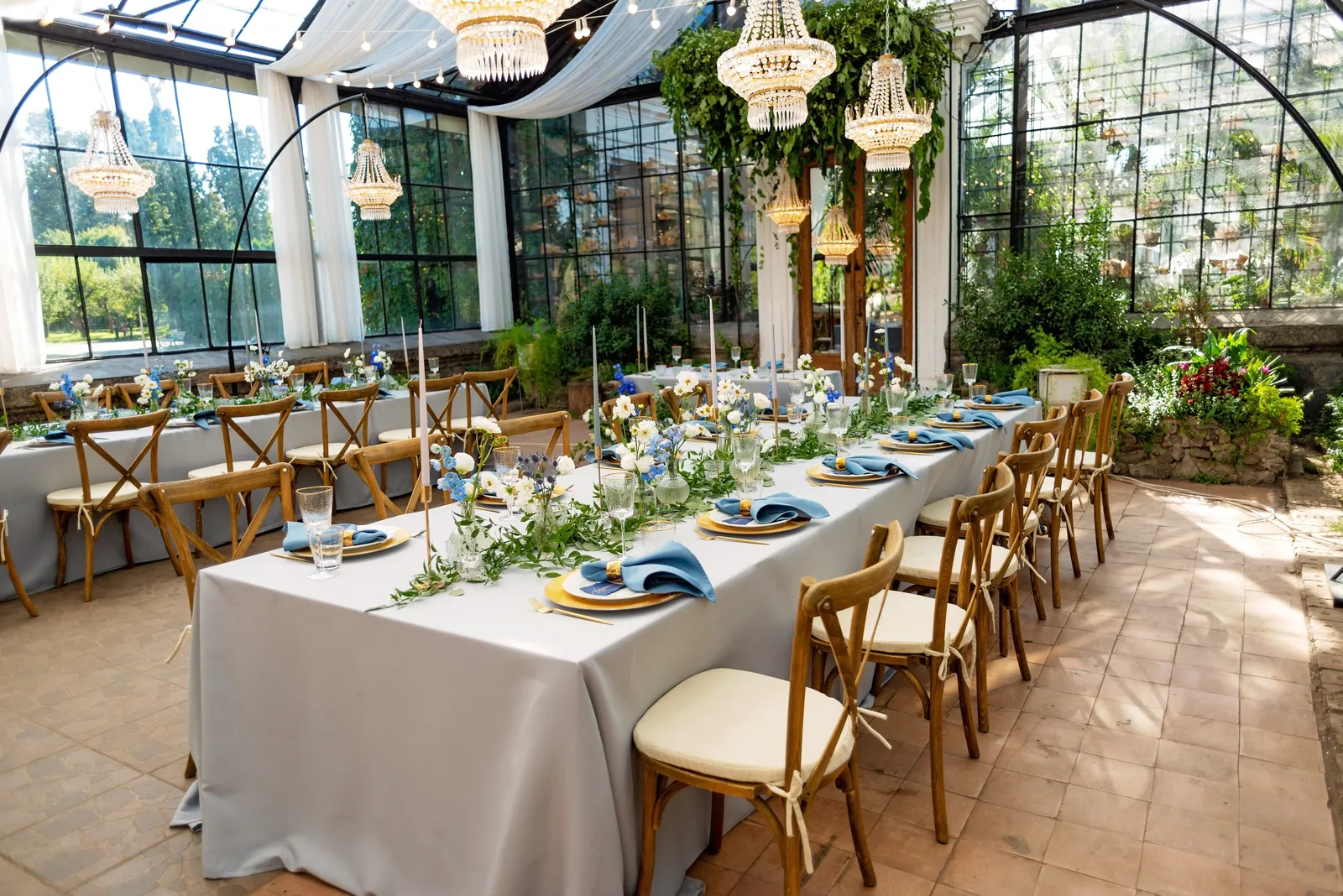
For the lunch, the venue has banquet tables but no linens that match the event's theme, so linens go on the worksheet as a rental gap with a status of "pending rental." The planner still needs a final guest count from the venue before placing that order.
The patio has no tent, cooling, or heating, so those go on the worksheet as open rental items. Because the reception starts right after the tight lunch changeover, the planner also confirms the venue's lightning evacuation point before guests move outside, instead of leaving that call for later.
By the end of the walkthrough, the worksheet shows which rows are venue-supplied, which are open, and how tight the changeover windows are between parts of the day. That completed sheet becomes the order list and schedule the planner takes into a rental quote, rather than a guess made days before the event.
Your Next Step After the Venue Walkthrough
Once your venue confirms what it already has, turn the remaining gaps into a rental order. Apex Party Rentals & Services offers corporate event rentals for the equipment your checklist flags as missing. See the Gainesville corporate event rentals page for more on these services. Get an Instant Quote to turn your finished checklist into a priced order.